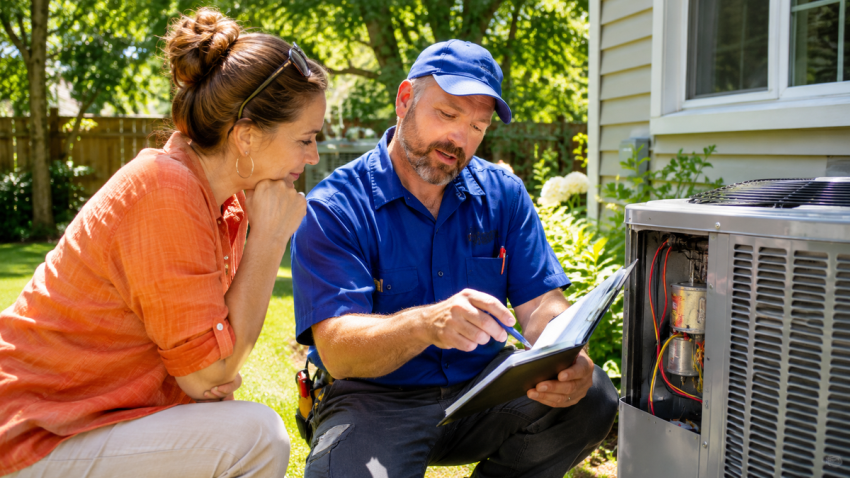
 An unexpectedly high electricity bill can make homeowners question whether their heating or cooling equipment is operating efficiently. The first response may be to consider replacing the air conditioner, heat pump, or another major appliance, but high energy consumption can have several causes. Before comparing home energy improvement loans, a household should investigate usage patterns and determine whether professional assessment could identify a less expensive solution. Spending money on the correct improvement is more valuable than financing a new system without understanding the problem.
Compare Usage, Not Just the Amount Due
A larger bill does not necessarily mean the equipment has become less efficient.
Electricity prices, billing periods, seasonal temperatures, and household activity can all influence the total charge.
Compare actual energy consumption over similar periods rather than looking only at the amount payable.
Consider whether the home has gained new occupants, added electrical equipment, or experienced unusually hot or cold weather.
If the utility provides historical usage information, review changes over several months.
A steady rise in consumption under similar conditions may warrant further investigation, while a one-time increase could have a different explanation.
Decide Whether a Professional Assessment Is Useful
A home energy assessment can examine factors such as insulation, air leakage, windows, ventilation, and heating or cooling performance.
The precise scope depends on the assessment provider and services purchased.
Ask what inspections and tests are included, whether written recommendations will be provided, and how the findings can help prioritize improvements.
Some households may first benefit from a routine HVAC service visit, particularly if the concern involves unusual equipment operation.
Avoid paying for overlapping inspections without understanding their different purposes.
A clear assessment should identify potential problems and help estimate which corrective actions could provide meaningful benefits.
Separate Maintenance From Major Upgrades
Dirty filters, blocked airflow, inappropriate controls, or neglected servicing can reduce the effectiveness of some systems.
Follow the manufacturer’s maintenance instructions and use qualified professionals where technical work is required.
A relatively modest service appointment may resolve an operational problem without the cost of replacing the entire unit.
However, equipment that is unsafe, severely deteriorated, or consistently unreliable may require more extensive work.
Ask for an explanation of the equipment’s condition and realistic remaining service life.
The decision should consider reliability, safety, comfort, and operating costs rather than assuming that new technology is automatically the best purchase.
Estimate Savings Conservatively
Energy-efficiency improvements can reduce consumption, but savings depend on the home, climate, equipment, installation quality, and household behaviour.
Request estimates that explain the assumptions behind projected savings.
Be cautious about promises that an upgrade will pay for itself within an unusually short period without supporting evidence.
Compare the installed price with expected maintenance costs and reasonable operating benefits.
A project may still be worthwhile because it improves comfort or reliability, even if its financial return is gradual.
Those benefits should be recognized separately rather than using them to exaggerate expected bill reductions.
Investigate Incentives Before Signing a Contract
Government, utility, or other energy-efficiency programs may provide assistance for eligible improvements.
Programs can change, and some require approval or specific assessments before work begins.
Verify current requirements through the responsible organization rather than relying on a contractor’s general description.
Ask whether your equipment, home, and proposed installation meet the conditions.
Keep written eligibility information with the project budget.
Do not assume a rebate will be paid until the necessary requirements and approval process are understood.
Potential assistance may reduce the amount needing financing, but uncertain rebates should not be treated as money already available.
Compare Financing With Smaller Improvements
If a major project is recommended, obtain detailed quotations from qualified providers.
Include equipment, labour, installation changes, taxes, permits where needed, and removal of existing components.
Compare the full financing cost with the expected benefits and the alternative of completing smaller improvements first.
Review interest, fees, repayment terms, and the amount payable over the entire agreement.
Avoid selecting a longer repayment period solely because it produces a comfortable-looking monthly number.
Also consider whether future maintenance or replacement costs could overlap with loan payments.
Create an Ongoing Energy Review
After completing any improvements, monitor energy use through comparable seasons.
Keep maintenance records and note significant changes in household equipment or occupancy.
Review settings periodically, especially when seasons change.
If expected savings do not appear, investigate before purchasing additional equipment.
A home’s energy performance usually depends on several systems working together.
The most effective financial strategy is to diagnose the causes of high consumption, prioritize verified improvements, and commit to financing only when the likely benefits justify the complete expense.